Unpacking America's Shadows: Travels With Charley, Racism, and a Nation's Reflection
Introduction:
Travels With Charley Racism Quotes
John Steinbeck's "Travels With Charley: In Search of America" is more than just a travelogue. It's a journey into the heart of a nation grappling with its identity, particularly the deeply ingrained issue of racism. Published in 1962, the book offers a snapshot of America on the cusp of significant social change, revealing uncomfortable truths about prejudice and segregation. This article will delve into the racism quotes from "Travels With Charley," examining their context, impact, and enduring relevance in understanding America's complex racial history. We'll explore how Steinbeck's observations, though controversial at times, provide valuable insights into the attitudes and experiences of the era.
The Context of "Travels With Charley": America in the Early 1960s
To fully understand the significance of the racism quotes in "Travels With Charley," it's essential to consider the historical backdrop. The early 1960s were a period of intense civil rights activism.
- Jim Crow Laws: Segregation was still legal in many Southern states, enforced by Jim Crow laws that discriminated against African Americans in all aspects of life, from education and housing to employment and public accommodations.
- Civil Rights Movement: The Civil Rights Movement was gaining momentum, with leaders like Martin Luther King Jr. advocating for equality and justice through nonviolent protest. Sit-ins, freedom rides, and marches were becoming increasingly common, challenging the status quo and demanding an end to segregation.
- Social Unrest: This period was marked by social unrest and racial tensions. The fight for civil rights was met with resistance from those who sought to maintain the existing racial hierarchy, leading to violence and discrimination.
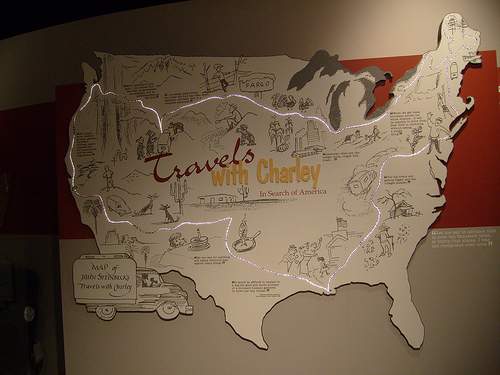
Steinbeck's journey took place against this turbulent backdrop, making his observations about racism all the more poignant and revealing.
Key Racism Quotes from "Travels With Charley" and Their Significance
The book contains several passages that shed light on the prevalence and nature of racism in America at the time. While some of Steinbeck's portrayals have been criticized for their perspective, they nevertheless offer a glimpse into the attitudes and beliefs that fueled segregation and discrimination.
- Quote 1: The Cheerleaders Incident in New Orleans

One of the most discussed and debated sections of the book recounts Steinbeck's experience witnessing a group of white women shouting racial slurs at Black students integrating a school in New Orleans. This scene is particularly disturbing because it reveals the raw, visceral hatred that existed in some segments of American society.
* **Analysis:** The incident highlights the intense opposition to integration and the lengths to which some people would go to maintain segregation. The language used by the women is shocking and underscores the dehumanization of African Americans that was central to racist ideology. * **Impact:** This passage has generated considerable controversy. Some critics argue that Steinbeck's portrayal is sensationalized or biased. Others contend that it accurately reflects the ugliness of racism. Regardless of interpretation, the scene is a powerful reminder of the hatred and prejudice that permeated American society.- Quote 2: Observations on the "Southern Way of Life"

Throughout his travels in the South, Steinbeck makes observations about the "Southern way of life" and its relationship to race. He notes the paternalistic attitudes of some white Southerners towards African Americans, as well as the subtle ways in which racism was embedded in everyday interactions.
* **Analysis:** Steinbeck explores the complex and often contradictory attitudes of white Southerners. He acknowledges the existence of genuine affection and respect between some white and Black individuals, but also points out the inherent inequality and injustice of the system. * **Impact:** These observations offer a nuanced perspective on the complexities of race relations in the South. Steinbeck avoids simplistic generalizations, instead portraying a society grappling with its history and struggling to reconcile its values with the demands of the Civil Rights Movement.- Quote 3: Reflections on the Nature of Prejudice
In various passages, Steinbeck reflects on the nature of prejudice itself, exploring its psychological roots and its devastating consequences. He suggests that prejudice is often born out of fear, ignorance, and a desire to maintain power and privilege.
* **Analysis:** Steinbeck delves into the underlying causes of racism, arguing that it is not simply a matter of individual bigotry but a systemic problem rooted in social and economic inequality. * **Impact:** These reflections encourage readers to examine their own biases and assumptions, and to consider the ways in which prejudice operates in society. They also highlight the importance of empathy, understanding, and a willingness to challenge injustice.Criticisms and Controversies Surrounding Steinbeck's Portrayal of Racism
"Travels With Charley" has not been without its critics. Some scholars and readers have raised concerns about Steinbeck's portrayal of racism, arguing that it is sometimes superficial, biased, or even complicit in perpetuating harmful stereotypes.
- Allegations of Simplification: Some critics argue that Steinbeck simplifies the complexities of race relations, failing to fully capture the experiences and perspectives of African Americans.
- Concerns about Objectivity: Others question Steinbeck's objectivity, suggesting that his own biases and assumptions may have influenced his observations.
- Debates about Authenticity: There have also been debates about the authenticity of Steinbeck's account, with some questioning whether he accurately represented the views and experiences of the people he encountered.
Despite these criticisms, "Travels With Charley" remains a valuable historical document, offering a glimpse into the attitudes and beliefs of a particular time and place. It is important to approach the book critically, acknowledging its limitations and biases, while also recognizing its potential to spark dialogue and promote understanding.
The Enduring Relevance of "Travels With Charley" in Understanding American Racism
Despite being written over sixty years ago, "Travels With Charley" continues to resonate with readers today. The issues of racism and inequality that Steinbeck explored remain relevant in contemporary America.
- Echoes of the Past: The book serves as a reminder of the long and painful history of racial discrimination in the United States. It highlights the importance of understanding this history in order to address the challenges of the present.
- Contemporary Parallels: Many of the issues that Steinbeck observed – such as racial profiling, police brutality, and systemic inequality – continue to plague American society today.
- Call to Action: "Travels With Charley" can serve as a call to action, inspiring readers to confront their own biases and to work towards a more just and equitable society.
Pro tips from us: When discussing sensitive topics like racism, it's crucial to approach the subject with empathy and respect. Acknowledge the pain and suffering caused by racism, and avoid language that could be interpreted as insensitive or dismissive.
Common mistakes to avoid are: Oversimplifying complex issues, making generalizations about entire groups of people, and ignoring the perspectives of marginalized communities.
Conclusion:
"Travels With Charley" offers a complex and often unsettling portrait of America grappling with the issue of racism. The racism quotes within the book, while sometimes controversial, provide valuable insights into the attitudes and experiences of the era. By examining these quotes in their historical context, and by acknowledging the criticisms and controversies surrounding Steinbeck's portrayal, we can gain a deeper understanding of America's racial history and its enduring legacy. The book serves as a reminder of the importance of confronting prejudice, promoting equality, and working towards a more just and equitable society for all. Understanding these historical contexts can help us better navigate conversations about race and inequality today.
Internal Linking:
You might also be interested in my article on [Link to another relevant article on your blog].
External Linking:
For more information on the Civil Rights Movement, visit the NAACP website.